Dental Emergency Questions Patients Ask Most Often
A true dental emergency has a way of shrinking time. Someone bites into lunch and hears a crack. A child wakes up crying with a swollen cheek. A weekend basketball game ends with a front tooth on the court. In those moments, people are not looking for abstract dental advice. They want to know whether they should wait, what they can do right now, and how serious the situation might become by morning.
Those questions come up again and again in emergency appointments. Some are straightforward. Others depend on details that matter more than patients realize, such as whether the pain is triggered by temperature, whether swelling is spreading, or whether a tooth was completely knocked out versus merely loosened. The challenge is not just calming the patient. It is sorting out urgency, reducing further damage, and getting the person into the right chair at the right time.
What actually counts as a dental emergency?
Patients often assume a dental emergency means only dramatic trauma, heavy bleeding, or a tooth knocked out in an accident. Those are certainly emergencies, but they are not the only ones. Severe pain that keeps you from sleeping, swelling in the gums or face, signs of infection, uncontrolled bleeding after an extraction, or a broken tooth with an exposed nerve can all require prompt attention.
The key question is whether waiting is likely to worsen the condition, increase the risk of infection, or make treatment more difficult. A small chip on the corner of a back tooth may not need same hour care. A broken molar with sharp pain on biting and cold sensitivity is a different matter. Similarly, mild gum soreness after flossing is not usually urgent. Swelling that makes it painful to open the mouth or swallow is.
Patients sometimes worry about bothering the office after hours. A good emergency triage process exists for a reason. Calling early often prevents a manageable problem from becoming a costly one. A cracked tooth that could have been protected with a temporary measure on Friday afternoon may become an extraction case by Sunday night if someone keeps chewing on it.
“Can this wait until Monday?”
This is probably the most common question of all, especially when pain starts at night or over the weekend. The honest answer is, sometimes yes, sometimes absolutely not.
If the issue is mild discomfort, a lost filling without significant pain, or a chipped tooth that has not changed the bite and is not cutting the tongue or cheek, waiting a day or two is often reasonable if the patient can keep the area clean and avoid chewing there. Even then, it is wise to schedule promptly, because seemingly minor breaks can deepen quickly.
If pain is intense, swelling is visible, fever is present, there is a bad taste or drainage from the gums, or the patient cannot sleep, waiting becomes much riskier. Infection can spread. Trauma can worsen. A tooth that might have been saved can become unsalvageable. One practical marker I often use is function. If the patient cannot eat, sleep, or manage the pain with basic measures, the problem has crossed into urgent territory.
There is also a middle category that causes confusion: pain that comes and goes. Patients sometimes interpret intermittent pain as a sign that the problem is resolving. In dentistry, that is not always true. A dying nerve can produce episodes of severe pain and then go quiet. Silence does not necessarily mean healing. It can mean the pulp has lost vitality, which may reduce one symptom while setting the stage for infection.
“I have a terrible toothache. Is that an emergency?”
A toothache is one of the hardest symptoms to judge from home because it can come from several causes. A cavity nearing the nerve, a cracked tooth, an abscess, gum disease, clenching, sinus pressure, or even referred pain from another tooth can all feel like “a bad toothache.” What matters is the pattern.
Pain that lingers after hot or cold, throbs spontaneously, wakes a person at night, or worsens with biting tends to suggest something more serious than brief sensitivity. If the face is swelling or the gums look puffy near one tooth, the concern for infection rises. If the pain spikes with cold and then fades quickly, that may still be a problem, but it is often less urgent than constant, escalating pain.
Patients are often surprised that over the counter pain relievers can mask severity without fixing the underlying problem. I have seen people rotate pain medication for days, hoping to “ride it out,” only to arrive with a visible swelling that developed after the nerve died. The tooth stopped hurting in one way, then became dangerous in another.
A severe toothache should be treated as a Dental Emergency when it is accompanied by swelling, fever, trouble swallowing, spreading pain, or sleep disruption. Those are not signs of a problem that should sit on a calendar for a week.
“My face is swollen. Do I call a dentist or go to the ER?”
This question deserves a careful answer because the wrong setting can waste precious time. Dentists treat the source of many oral infections. Emergency rooms manage threats to breathing, deep facial spread, dehydration, or systemic illness. The dividing line is severity and safety.
If swelling is localized to the gum or cheek and the patient can breathe, swallow, and speak normally, an emergency dental visit is usually the best first stop. The dentist can identify the source tooth, relieve pressure if appropriate, and arrange definitive treatment such as root canal therapy, extraction, or drainage. Antibiotics alone rarely solve a dental infection for long if the source remains untreated.
If swelling is spreading rapidly, the eye is involved, swallowing becomes difficult, the patient cannot open the mouth well, breathing feels impaired, or fever and weakness are significant, the emergency room becomes the right choice. Deep infections in the face and jaw are not something to watch overnight.
One of the more dangerous misconceptions is that pain level equals danger level. Some serious infections do not hurt as much as patients expect, especially if pressure has started to drain. A swollen face with even modest pain can still be urgent.
“What should I do if a tooth gets knocked out?”
This is one of the few situations where minutes matter in a very literal way. A permanent tooth that is fully knocked out has the best chance of being saved if it is handled correctly and reimplanted quickly. Baby teeth are different, and they are generally not replanted because of the risk to the developing permanent tooth underneath.
If a permanent tooth is knocked out, pick it up by the crown, not the root. If it is dirty, rinse it gently with milk or saline, or briefly with water if nothing else is available. Do not scrub it. If possible, place it back in the socket and have the person bite gently on clean gauze or cloth to hold it there. If reimplantation is not possible, keep the tooth moist in milk or a tooth preservation solution if available. Some people can hold it inside the cheek if they are alert and old enough not to swallow it, but milk is often the safer practical choice.
Here are the immediate priorities:
- Control bleeding with gentle pressure.
- Handle the tooth only by the crown.
- Keep the tooth moist at all times.
- Get to a dentist immediately, ideally within 30 to 60 minutes.
- Bring the tooth even if extra time has passed.
People often ask whether a tooth can still be saved after an hour. Sometimes yes, but the odds decline as the root surface cells dry out. Speed helps, but proper handling helps too. I have seen teeth damaged more by enthusiastic cleaning than by the original fall.
“My tooth cracked, but it doesn’t hurt much. Is it still urgent?”
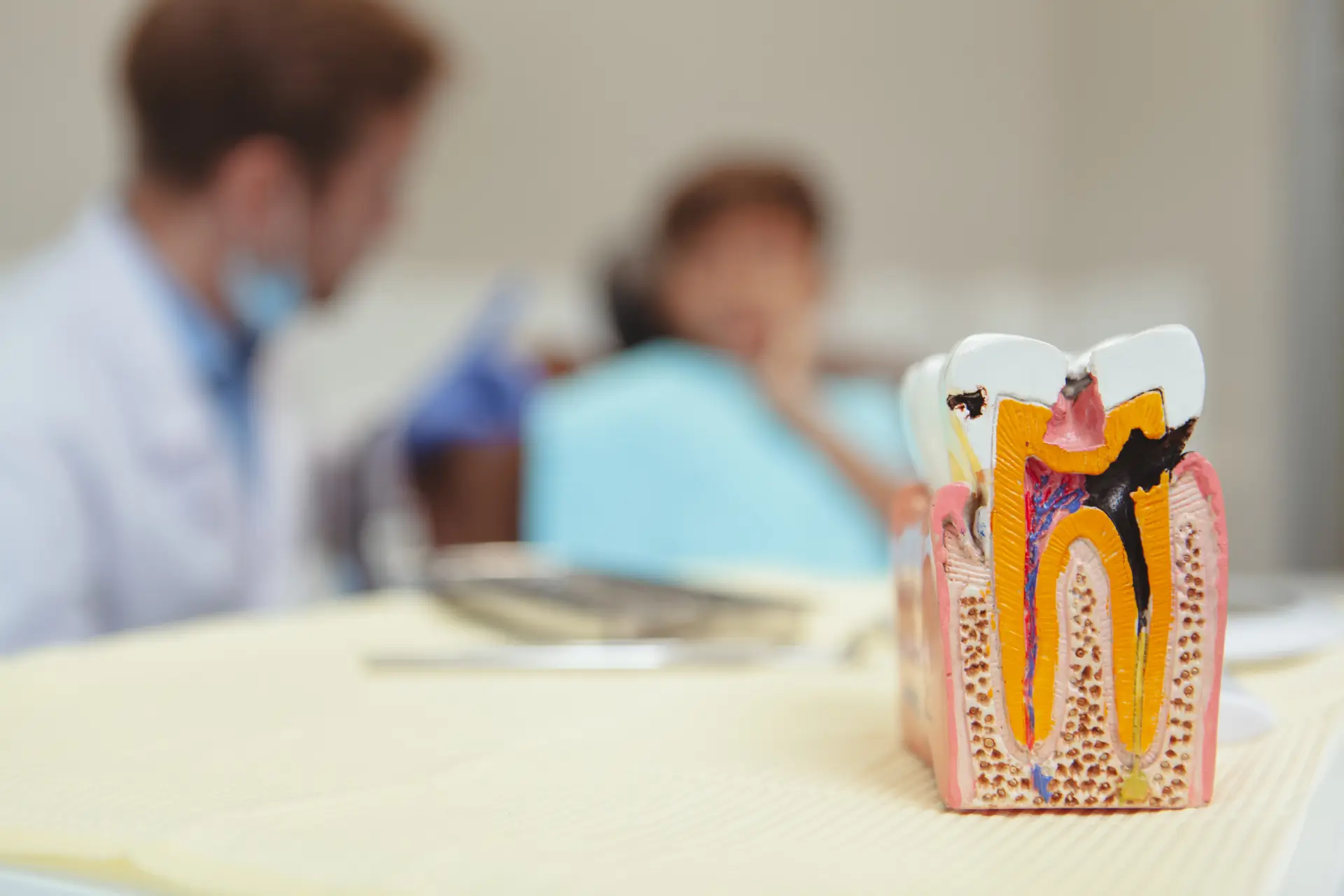
Possibly. Cracks are deceptive. Some remain superficial and stable for years. Others act like a fault line in glass, growing under chewing pressure until they split the tooth or expose the pulp. A tooth can be cracked without dramatic pain, especially early on.
The details matter. A rough edge with no change in bite and no temperature sensitivity may be less urgent than a crack that causes sharp pain when biting and release, which often suggests movement in the tooth structure. A line that extends into a cusp on a molar is more concerning than a tiny chip on the edge of an incisor. Teeth with large old fillings are especially prone to hidden fractures because so much of the natural internal support is already gone.
Patients are often tempted to test the tooth repeatedly by chewing on it. That is understandable and almost always a bad idea. Every force cycle can deepen the crack. Soft food, chewing on the opposite side, and a prompt evaluation are the safer choices.
A recent patient described hearing a “pop” while eating crusty bread, then felt only mild discomfort. By the next morning, the tooth had fractured far enough that the cusp was mobile. What could have been stabilized with a crown if protected immediately became a far more involved decision. That is the kind of case that explains why “not hurting much” is not the same as “not serious.”
“I lost a filling or crown. Do I need to be seen right away?”
Not always right away, but usually soon. Losing a restoration leaves the tooth exposed and vulnerable. Some patients feel nothing at first. Others develop extreme sensitivity within hours because the dentin is uncovered or the underlying decay was already close to the nerve.
A lost crown can sometimes be temporarily reseated if it is Dental Emergency clean and fits well, but that should be done carefully and only as a short-term measure. Over the counter temporary dental cement can help in selected cases. Household glues should never go in the mouth. They are not designed for living tissue, they can damage the tooth, and they complicate proper re-cementation.
If the crown or filling came off while the tooth underneath feels fractured, sore on biting, or visibly decayed, the urgency rises. Teeth do not lose restorations for no reason. Cement can fail over time, but sometimes the real problem is decay, a crack, or heavy grinding forces.
People are often surprised when a lost filling turns into root canal treatment despite quick action. That is not because they did something wrong. It is because the tooth may already have been close to the edge before the filling came out. Timing helps, but existing damage still matters.
“How do I know if it’s an infection?”
Patients usually imagine infection as obvious swelling and fever, but early dental infections can look subtler. Pain when biting, a pimple-like bump on the gums, a foul taste, throbbing pressure, and heat sensitivity can all be signs. Sometimes the only clue is that the patient feels “off” and one tooth seems elevated or tender.
The bump on the gum is especially misunderstood. People assume that if it drains and the pain improves, the issue is resolving on its own. What has actually happened in many cases is that the infection found an outlet. The source is still there. Drainage can reduce pressure while the problem remains active in the bone and root area.
Not every infection needs the emergency room, but every suspected dental infection needs timely professional assessment. Delays can mean more bone loss, more extensive treatment, and greater discomfort. Antibiotics have a role, but they do not remove dead tissue, close cracks, or disinfect a root canal system by themselves.
“Can I take antibiotics and skip treatment for now?”
This comes up more often than many people realize, particularly before travel, during holidays, or when a patient is trying to get through a demanding work week. The short answer is no, not if the goal is to solve the problem.
Antibiotics can reduce bacterial load and may buy time in specific situations, especially when swelling or systemic signs are present. They are not a substitute for treating the cause. If the problem is an abscessed tooth, the infection usually returns unless the tooth is treated with root canal therapy or extraction, depending on the diagnosis. If the cause is periodontal, trapped food and bacteria around a gum pocket, the local problem still needs direct care.
There is also a practical downside to repeated “rescue” antibiotic courses. They can cloud the clinical picture, contribute to resistance, and create false reassurance. By the time some patients finally seek treatment, the infection has flared several times, the tooth structure is weaker, and options are narrower.
“What can I do at home before I get to the dentist?”
Home care is about protecting the area and controlling symptoms, not improvising definitive treatment. Good temporary habits can make a meaningful difference during the hours before an appointment.
A simple approach usually works best:
- Rinse gently with warm salt water if the tissue is irritated.
- Use a cold compress on the outside of the face for swelling from trauma.
- Eat soft foods and chew on the opposite side.
- Keep any broken tooth fragment or crown and bring it to the appointment.
- Use medication only as directed on the label or by your clinician.
Patients sometimes try aspirin directly on the gum near the painful tooth. That old home remedy can burn the tissue and add another problem. Heat is another common mistake. People use a heating pad for comfort, but external heat can aggravate swelling in some cases. Cold is usually the safer choice after trauma.
If there has been significant bleeding, firm pressure with clean gauze often works better than repeatedly checking the site. Constantly lifting the gauze to “see if it stopped” can interrupt clot formation. That principle matters after extractions and after injuries.
“Is bleeding after an extraction normal, or is it an emergency?”
Mild oozing after an extraction is common. Active bleeding that soaks gauze repeatedly for hours is not. Patients often describe saliva tinged pink as “bleeding a lot,” when it may be a small amount of blood mixing with saliva. A better measure is whether the socket is producing enough fresh blood to fill the mouth or saturate gauze quickly despite proper pressure.
Biting steadily on folded gauze for 30 to 45 minutes without talking, spitting, or rinsing gives the clot the best chance to form. Tea bags can occasionally help because tannins may support clotting, but pressure remains the main tool. Smoking, vigorous rinsing, straws, and intense exercise can all interfere with clot stability.
The emergency threshold rises if bleeding is brisk and persistent, the patient feels faint, blood thinners are involved, or the extraction site was surgically complex. A quick phone call to the treating office is often the fastest path to the right advice.
“What if my child has a dental emergency?”
Pediatric emergencies carry extra emotion because children may struggle to describe symptoms clearly. A swollen face, trauma to the mouth, uncontrolled bleeding, or a child who refuses to eat and cannot sleep due to oral pain deserves prompt attention.
The distinction between baby teeth and permanent teeth matters. A knocked out baby tooth is usually not replanted. A knocked out permanent tooth in an older child or teenager should be managed urgently, just as in an adult. Soft tissue injuries can also look worse than they are because mouths bleed dramatically. A split lip can create a startling amount of blood from a relatively small wound.
Children with dental trauma should also be watched for signs beyond the teeth, especially after sports injuries or falls. If there was any possibility of concussion, loss of consciousness, vomiting, or significant facial injury, broader medical evaluation may be needed alongside dental care.
One practical challenge in children is delayed swelling after trauma. A tooth may look only slightly displaced on the day of injury and become increasingly tender or discolored over the following weeks. That is why follow-up matters even when the child seems fine after the initial event.
“Why do dentists ask so many specific questions on the phone?”
Because those details shape triage. When did the pain start? Is it spontaneous or only on chewing? Is there swelling? Fever? Trauma? Is the tooth loose? Can the patient swallow normally? Has the person taken anything for pain, and did it help? These are Dental Emergency not routine scripts. They help determine whether the office should make space immediately, whether the patient should go straight to a hospital setting, or whether home measures are acceptable until the next opening.
Patients sometimes worry they are not describing things “correctly.” Precision helps, but simple observations are usually enough. Saying “it feels like the tooth is too tall when I bite,” “cold hurts for a minute,” or “the swelling is under my eye now” is extremely useful. Those details often point more clearly than the pain score alone.
The bigger pattern behind most dental emergencies
Many emergencies are true accidents, but a fair number begin as small warnings that were easy to postpone. A crown that felt loose for months. A tooth that hurt only with ice. A filling that kept catching floss. Dental problems often announce themselves quietly before they become urgent.
That does not mean patients are careless. Life gets busy, symptoms fluctuate, and dental pain has a notorious habit of easing right before it returns at the worst possible time. Still, one of the most valuable things a patient can understand is that early treatment usually buys better options. Smaller repairs stay smaller. Cracks are easier to protect before they spread. Infections are easier to control before swelling develops.
A Dental Emergency is stressful by definition, but clear decisions reduce some of that chaos. If there is trauma, swelling, severe pain, uncontrolled bleeding, or any difficulty breathing or swallowing, act quickly. If the situation feels less dramatic but is changing fast, call anyway. Most people do not regret getting timely advice. They regret assuming a problem would settle down on its own.
That pattern shows up in emergency schedules every week. The people who call early often leave with a simpler fix than they expected. The people who wait until the situation becomes unbearable usually need more than they hoped for. When something in the mouth suddenly changes, especially pain, swelling, or the way the teeth fit together, it is worth treating that change as meaningful. Dentistry is full of conditions where a few hours or a couple of days can alter the outcome.
Vitality Dental
Address: 1220 Coit Rd #106, Plano, TX 75075
Phone number: +19726454100
FAQ About Dental Emergency
What can the ER do for a tooth?
An emergency room (ER) can manage pain and treat severe infections with medication, but it cannot fix or pull a tooth.
What is considered a dental emergency?
A dental emergency is any oral health problem that involves severe pain, uncontrollable bleeding, or an infection that threatens your health or requires immediate care to save a tooth.
Is there a 24-hour dental service in Plano, TX?
There is no physical dental clinic in Plano, Texas, that stays open with walk-in staff 24 hours a day, but several offices offer 24/7 phone support, late-night hours, or same-day emergency care.