What to Expect From Same-Day Emergency Dental Treatment in Plano, TX
A dental emergency has a way of shrinking your world fast. One moment you are working, driving, eating lunch, or getting a child ready for school. The next, all your attention is fixed on a cracked molar, a swelling gumline, or a pain that seems to pulse all the way up the side of your face. In those moments, people usually want the same thing, relief now, clear answers, and confidence that the problem is being handled correctly.
Same-day emergency dental care is built for exactly that situation. If you need an emergency dentist Plano, TX patients can often find offices that reserve time in the schedule for urgent visits, especially for severe pain, trauma, broken teeth, infections, lost restorations, or sudden swelling. What that treatment looks like in practice depends on the cause of the problem, how advanced it is, and what the dentist sees once imaging and an exam are complete.
The most helpful expectation to carry in is this: same-day emergency treatment is designed to stabilize the issue Emergency dentist Plano, TX first. Sometimes that means complete treatment in one visit. Sometimes it means the dentist relieves pain, controls infection, protects the tooth, and schedules the definitive procedure once the area has settled down or more time is available. Both approaches can be appropriate. The right choice depends on biology, safety, and what gives you the best long-term result.
What counts as a dental emergency
Not every dental problem is an emergency, but many are more urgent than people realize. A toothache that keeps you from sleeping, a cracked tooth that hurts to bite on, a knocked-out tooth, sudden facial swelling, bleeding that does not stop, or a crown that came off a front tooth the day before an event all deserve prompt attention. Some situations are more obviously serious than others.
A patient with cold sensitivity for a few weeks may still need treatment soon, but a patient who cannot close their mouth comfortably because of swelling has crossed into a different category. The same is true for a child who falls and chips a permanent front tooth, or an adult who wakes up with intense throbbing and a gum bump near a molar. In real practice, emergencies range from cosmetically upsetting to medically significant, and the exam is what separates one from the other.
If you are ever dealing with swelling that affects breathing or swallowing, that is no longer just a dental scheduling issue. That can require immediate medical attention in an emergency room setting. Dentists see oral infections often, and most are manageable, but certain infections can spread into deeper facial spaces. Good emergency teams know when to treat in office and when to escalate.
The first phone call matters more than people think
Before you ever sit in the chair, the phone conversation often shapes how quickly things move. A well-run office will ask direct questions about your symptoms, when they started, whether there was trauma, whether you have swelling, fever, bleeding, or trouble swallowing, and whether you are an existing patient. They may also ask if the pain is triggered by hot or cold, whether it lingers, and whether biting makes it worse. Those details help the team gauge urgency and prepare the room, imaging, and likely treatment path.
If a tooth has been knocked out, time matters. If there is swelling, the staff will want to know whether it is localized to the gum or visible in the face. If a crown or veneer fell off, they may ask you to bring it. If a tooth broke, they may ask whether you have the fragment. These are practical questions, not paperwork filler.
You can usually expect guidance before arrival. That may include using a cold compress on the outside of the cheek, rinsing gently with warm salt water, avoiding chewing on the area, and taking over-the-counter pain medication if you can safely do so. You should not place aspirin directly on the gum. People still do this, and it can irritate or burn soft tissue without solving the cause of the pain.
What happens when you arrive for a same-day visit
Emergency visits are usually more focused than routine appointments. The goal is not a full cosmetic consultation or a broad long-term plan in the first ten minutes. The goal is to identify the source of the problem, determine urgency, and get you stable.
Most same-day appointments move through a familiar sequence:
- A brief medical and symptom review, including allergies, medications, and when the pain or injury began.
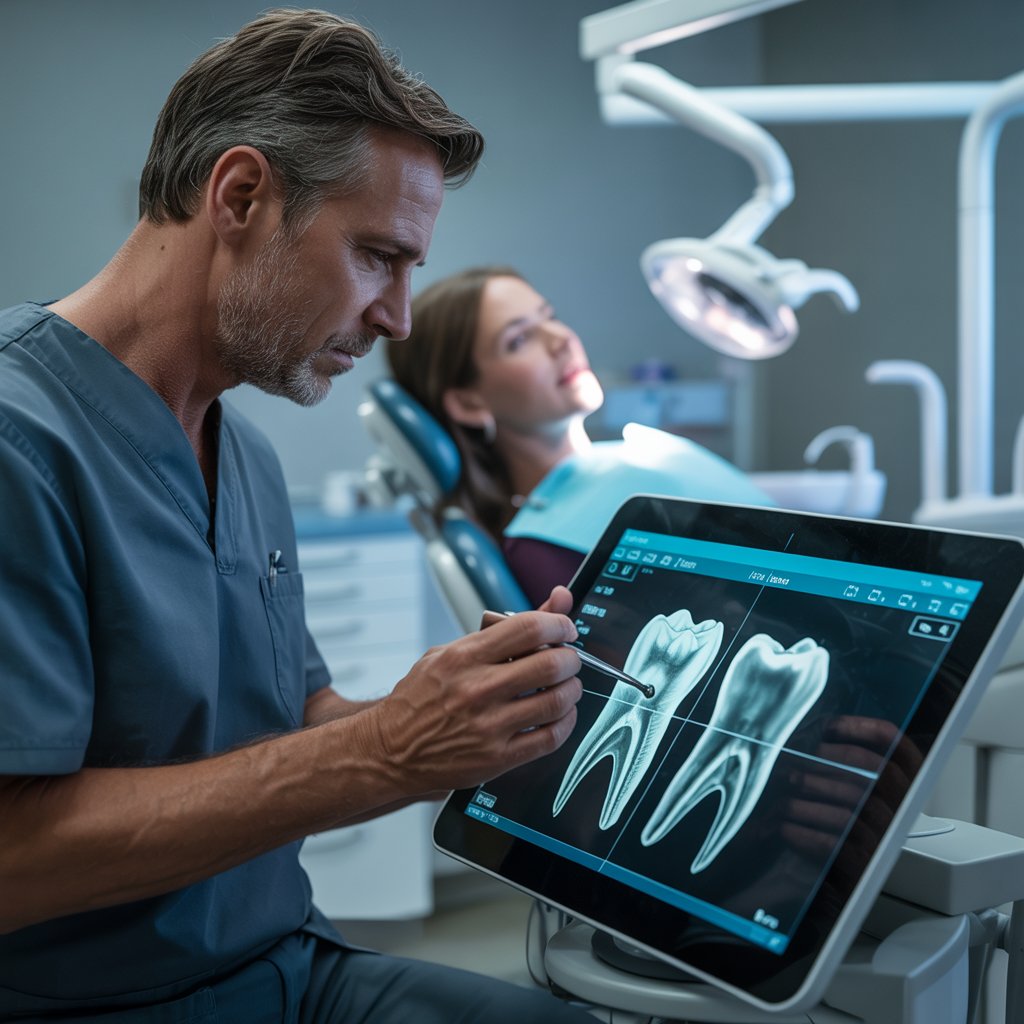
- Diagnostic imaging, often a focused x-ray, and sometimes additional images if the source is not obvious.
- A clinical exam to test the tooth, surrounding gums, bite, mobility, and any swelling or trauma.
- A discussion of what the dentist believes is happening and what can be done that day.
- Immediate treatment, pain control, or protection of the tooth, followed by aftercare instructions.
That sounds straightforward, but emergency diagnosis can require judgment. A patient may point to one tooth while the actual culprit is the tooth behind it. Referred pain is common. Upper molars can create pain that seems like sinus pressure. A cracked tooth may look fine on an x-ray but hurt sharply on release when biting. Infections may start deep and only show subtle signs early on. Experienced emergency clinicians are not just looking for what is obvious, they are also ruling out what can hide.
Why x-rays and testing are often necessary
People in pain sometimes hope the dentist can simply look and fix the issue immediately. Sometimes that is possible. A lost filling, a fractured corner, or a dislodged temporary crown may be obvious. But deep decay, root infections, hairline fractures, and trauma to the supporting bone are not always visible with the naked eye.
X-rays help reveal decay between teeth, infection around the root tip, bone loss, prior dental work, and the position of impacted or damaged teeth. Sensitivity testing, percussion, bite tests, and palpation of the surrounding tissues add another layer. If a tooth is not responding normally to temperature or tapping, that changes the likely diagnosis. If swelling follows the gumline rather than the root area, the treatment path may shift from endodontic to periodontal care.
This is one reason same-day emergency care can feel both fast and deliberate. The pace is urgent, but the diagnosis still has to be accurate. Treating the wrong tooth, or jumping into a procedure before the source is clear, wastes time and can worsen the situation.
What same-day treatment may include
The phrase "same-day emergency dental treatment" covers a wide range of care. For one patient, it may mean smoothing a sharp broken edge and placing a temporary restoration. For another, it may mean draining an abscess, initiating root canal therapy, or removing a tooth that cannot be predictably saved.
Some of the most common same-day interventions include local anesthesia for pain control, placement of a sedative filling, re-cementing a crown, bonding a chipped front tooth, prescribing medication when appropriate, draining localized infection, adjusting a high restoration that is causing bite pain, or extracting a severely damaged tooth. If the problem is a dislodged or knocked-out tooth, the dentist may attempt repositioning or splinting depending on the situation and how much time has passed.
One practical point surprises many patients. Antibiotics do not fix every dental emergency. If the source is a dying nerve inside a tooth, the pressure and pain often improve only when the tooth is opened, drained, treated with root canal therapy, or removed. Antibiotics may support treatment when swelling or spreading infection is present, but they are not a substitute for addressing the source. Good emergency care is procedural when needed, not just pharmaceutical.
Pain relief, and what “relief” really means
Most people seek emergency care because they want the pain to stop. That is completely reasonable. Still, it helps to understand what relief may look like after treatment. If a dentist numbs the area, drains pressure, removes decay close to the nerve, starts a root canal, or extracts the tooth, you will usually feel substantially better than when you walked in. But that does not always mean you feel perfect by dinner.
Inflamed tissue often needs time to calm down. A tooth with a severe infection may feel tender for a day or two even after proper treatment. An extraction site can be sore. A jaw that stayed open during a difficult emergency visit may feel stiff. This is normal, and the aftercare instructions are there for a reason.
The best same-day emergency appointments are not only about instant pain reduction. They also create predictability. When patients understand what was done, what the next 24 to 72 hours may feel like, and when to call back, anxiety tends to drop sharply.
If you need a root canal that day
One of the most common urgent treatments is root canal therapy, or at least the first phase of it. This is often recommended when the pulp inside a tooth is infected or irreversibly inflamed. The classic history is throbbing pain, sensitivity to hot that lingers, pain that worsens at night, or tenderness when biting, though every case has its own pattern.
In an emergency setting, the dentist may fully complete the root canal if time, anatomy, and swelling allow. In other situations, the goal is to open the tooth, remove infected tissue, disinfect the canals, place medication inside, and seal it temporarily. That can be enough to break the cycle of pressure and pain. The final filling or crown may happen later.
Patients sometimes worry when they hear that treatment is being staged instead of finished in one sitting. That is not a sign of incomplete care. It is often a sign of careful care. A badly infected tooth, a difficult canal system, or a packed emergency schedule may make phased treatment the best option.
If the tooth needs to come out
Extraction is sometimes the most predictable emergency solution, especially when the tooth is fractured below the gumline, has severe decay that extends too deep, is split through the root, or has advanced infection and poor long-term prognosis. Most dentists do not recommend removing a salvageable tooth lightly. Preserving natural teeth is usually preferred when the structure and support justify it. But emergency care is also about being honest. If saving the tooth would involve extensive cost, low predictability, or repeated short-term fixes, extraction may be the better decision.
When an extraction is done the same day, the dentist will numb the area, remove the tooth, manage the site, and review healing instructions. Depending on the case, they may discuss replacement options later, such as an implant, bridge, or partial denture. That part does not usually have to be decided on the spot, particularly if you are arriving in pain and just need the immediate problem handled first.
Dental trauma is its own category
A sports injury, fall, or bite on something hard creates a different kind of emergency. With trauma, the clock matters, especially for permanent teeth that are displaced or knocked out. The first questions are whether the tooth is intact, whether the nerve and root appear compromised, and whether the bone or soft tissue was also injured.
If a tooth is knocked out completely, the best chance of saving it often depends on how quickly it is replanted and how it was handled outside the mouth. Holding it by the crown rather than the root, avoiding scrubbing, and keeping it moist can make a real difference. If a tooth is pushed inward, partially dislodged, or suddenly loose after a hit, that needs prompt evaluation even if pain is not dramatic at first. Trauma can damage the blood supply without causing immediate symptoms.
Front tooth injuries also carry an emotional component. Adults worry about appearance at work. Parents worry because children can be frightened by blood and a broken smile. In those moments, the practical steadiness of the dental team matters as much as the technical work.
Cost, insurance, and why emergency visits can vary
People often ask what a same-day emergency visit will cost, and the honest answer is that it depends on what is found. The exam and x-rays are one layer. The procedure is another. Re-cementing a crown is not priced like initiating a root canal. A simple extraction is not the same as a surgical extraction. If sedation, additional imaging, or medication is involved, that affects the total as well.
Most reputable offices will explain the recommended treatment and expected fees before proceeding whenever possible. If you have dental insurance, the office can often provide an estimate, though coverage varies by plan and benefit year. For uninsured patients, many practices offer payment options or staged treatment planning. In a true emergency, the most important thing is not to avoid care because you assume it will be unaffordable. There is often more flexibility than patients expect, especially when the alternative is worsening pain or infection.
How to prepare before you leave home
If you are trying to get to an emergency dentist Plano, TX residents can make the visit smoother by bringing a few basics and avoiding a few common mistakes.
Bring these if you can:
- A list of medications and any allergies.
- Your dental insurance information, if you have it.
- The crown, veneer, retainer, or tooth fragment if it came out intact.
- A brief timeline of what happened and what makes it better or worse.
- A driver, if you are anxious, in heavy pain, or expect sedation.
Beyond that, try not to eat on the injured side, keep the area reasonably clean, and avoid applying heat to facial swelling unless the office specifically tells you otherwise. Heat can sometimes make swelling worse in the early phase. Cold packs on the outside of the face are usually the safer first step.
What recovery usually looks like
Most emergency dental recovery is manageable, but it is not one-size-fits-all. A bonded chip on a front tooth may require almost no downtime. An abscess drainage or extraction may leave you sore for a couple of days. A root canal start may relieve intense pain quickly, yet the tooth can still feel bruised when chewing until definitive restoration is complete.
Aftercare usually focuses on controlling inflammation, protecting the area, eating softer foods for a short period, and following medication directions closely. If the office places a temporary filling or crown, be gentle with sticky or hard foods. Temporaries are functional, not indestructible. If you were treated for infection, improvement should be progressive. You may not feel normal overnight, but swelling and pain should trend in the right direction. If they do not, the office needs to know.
One point worth stressing is follow-up. Emergency treatment is sometimes definitive, but just as often it is the first stage. Patients feel better, get busy, and postpone the crown after a root canal or the replacement plan after an extraction. That can create a second problem later. Stabilization is not always the finish line.
Choosing the right expectations
The most useful mindset for a same-day emergency appointment is practical rather than perfectionist. Expect the team to move with urgency, but also expect them to verify the diagnosis before drilling, extracting, or prescribing. Expect relief, but understand that tissues still heal on their own timetable. Expect options, though not every option will be equally predictable. And expect honesty if the tooth is savable only at significant cost or with limited long-term certainty.
In a city the size of Plano, same-day emergency dental care is often available, but the quality of that care is not just about getting in the chair quickly. It is about whether the office asks the right questions, recognizes red flags, treats pain seriously, and makes decisions that protect your long-term oral health instead of just putting a temporary patch over the immediate symptom.
For patients, that means the best emergency visit is not always the one with the fastest fix. It is the one where you leave understanding what happened, what was done, what comes next, and what to watch for. When those pieces are clear, the situation feels less chaotic, and that alone can make a miserable day a lot more manageable.
Vitality Dental
1220 Coit Rd # 106, Plano, TX 75075, United States
+1 972-645-4100
FAQ About Emergency dentist Plano, TX
Will the ER do anything for dental pain?
An emergency department can assess urgent symptoms and provide medical stabilization. Definitive treatment of the tooth usually requires a dentist. Seek emergency medical care for breathing or swallowing difficulty, uncontrolled bleeding, or serious facial injury.
What to do if I have a dental emergency in the middle of the night?
Contact a dentist or after-hours dental service promptly for guidance. If a permanent tooth is knocked out, keep it moist in milk while seeking immediate care. If symptoms suggest a medical emergency, go to an emergency department.
What qualifies as a dental emergency?
A knocked-out permanent tooth, severe or persistent tooth pain, a significant dental injury, or swelling may require urgent dental assessment. Call a dentist to describe the symptoms and determine timing. Uncontrolled bleeding or difficulty breathing or swallowing requires emergency medical care.